







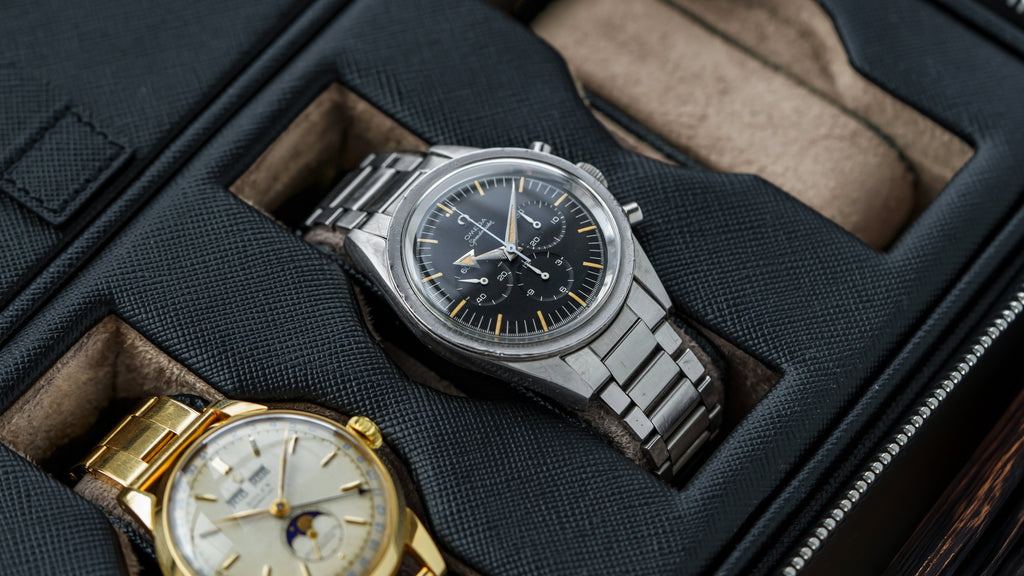


25657OR Audemars Piguet Perpetual Calendar
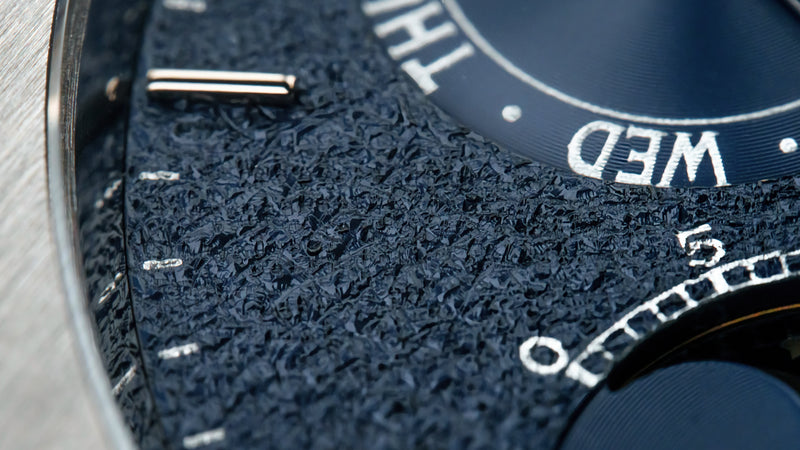
The 25657OR was made in 362 examples in pink gold, between 1982 and 1993. This is the golden era of neo-vintage AP and they’re quite under-sung. For whatever reasons (likely because 1821 examples exist, AP made a few), they’ve relatively accessible and easy to come by today despite being one of the rarer metals of the reference. (1 in steel, 5 in bimetal, 16 in white gold, 128 in platinum, 362 in pink, and 1,309 in yellow). The 25657 was produced in parallel and after the 5548, easily distinguished by sunken subdial which does add to the dial’s perceived depth. In pink gold, it is simply perfect.
 Photography for this Find comes from a prior sale by A Collected Man. Example in market today linked below.
The origins of the Quantième Perpétual are the part of the story most worth telling. The calibre 2120/2800 was developed in the throes of the quartz crisis, in secret, by a team of three senior watchmakers—lead watchmaker Michel Rochat, technical-department founder Jean-Daniel Golay, and head of service Wilfred Berney—who feared Audemars Piguet's budget would no longer allow for the development of complicated mechanical watchmaking. Rather than abandon the idea, the three formed their own skunkworks and worked after-hours, unpaid, and by most accounts without the consent of the company's leadership (quite the opposite). They built early mockups out of cardboard and developed the blueprints with help from the Vallée de Joux watchmaking school, with Berney bringing the key suggestion: to marry the existing ultra-thin 2120 automatic with a perpetual calendar module. That base was a thoroughly reworked JLC 920 ébauche fitted with its own calendar works, and the result revived not only Audemars Piguet's complications but, arguably, mechanical watchmaking's confidence at its lowest commercial point. The lines of the Quantième Perpétuel case were drawn in 1977 by Jacqueline Dimier, a Genta protégé.

The 25657OR now sits squarely in the neo-vintage, "holy trinity" perpetual-calendar conversation, valued for classic proportions, genuinely complicated watchmaking, and the lesser-known variations the reference quietly produced. CEO Georges Golay, who greenlit the production of 159 pieces, viewed it as a gamble. Each was 5,500 CHF, around four times the price of a steel Royal Oak. This should tell you what a relative value these 36mm QPs are today, as if the looks alone didn’t.

This example features a strong case and retains lovely engravings. Its seller claims the case hasn't been polished. It looks full at the least. It comes with an Extract of Archive from AP and keeps the original buckle.



0 comments
Write a Comment