









Roger Dubuis Hommage H37 Monopusher
Early Roger Dubuis, in design and finish, often feels closer to the Patek Philippe of old than much of Patek Philippe does today. It could not feel more separate from the brand's modern incarnation. This brief flash of brilliance came directly after Dubuis had spent nearly two decades at Patek, heading the complications department and restoring the manufacture's most complex references. That steeping in the very best of vintage complicated Patek shaped his eponymous brand from its 1995 founding, an attitude that did not survive the transition to Richemont ownership. We're left with a window from '95 to '03 to study as the apex of the master's work.
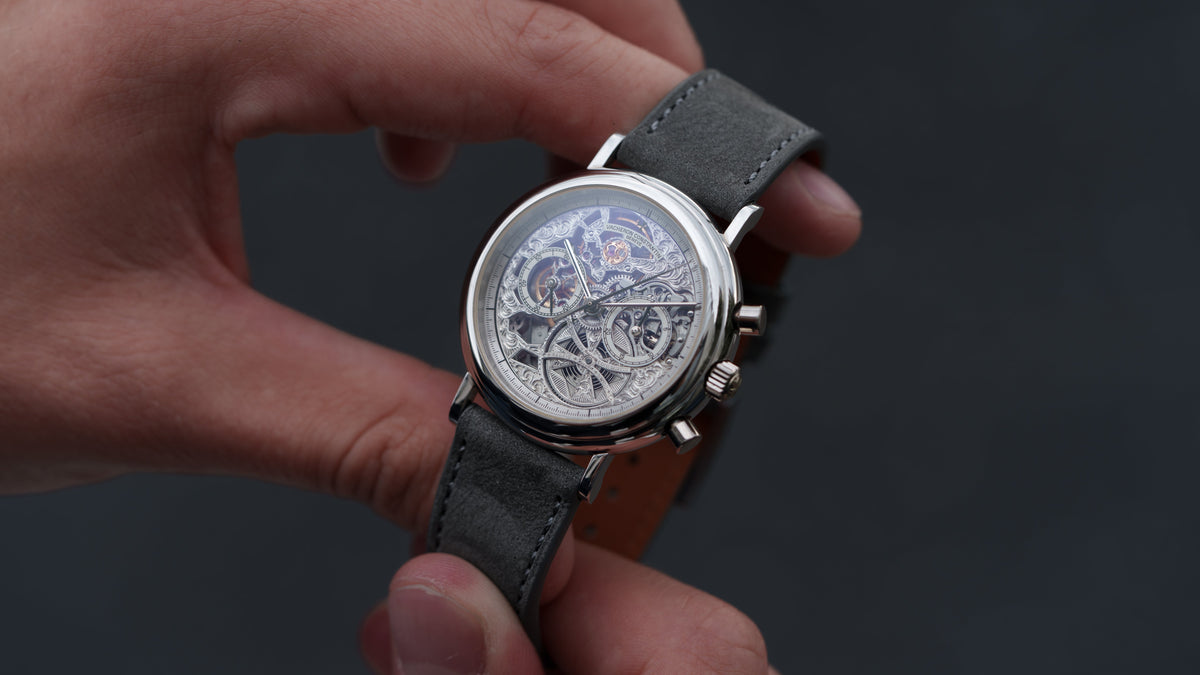
 Photography of this H37 comes via a prior sale by A Collected Man, example in market linked below.
The H37 Monopoussoir is the purest expression of that window. Its chronograph is commanded entirely through the winding crown, the most archaic chronograph architecture there is. The first chronograph wristwatches of the early 20th century were single-button, operated at the crown; separate pushers only arrived in the 1930s. Dubuis reached past all of it, back to the beginning. He was intimately familiar with the Lemania 2310 from Patek, secured rights to the ébauche, and remains one of very few watchmakers to have built a monopusher version of it. Crown-pusher examples came in 37 and 40mm.

Why does it matter? Each calibre was hand finished to the Geneva Seal, then sent to the Besançon Observatory for the most rigorous timing certification available: 16 days, 5 positions, temperatures from 8°C to 23°C and finally 38°C. Regulation on every example was performed by Roger himself, hence the 'Bulletin d'Observatoire' on the dial. No variant exceeded 28 pieces, each numbered on the case side, and the monopushers are the scarcest of the lot—likely far fewer than 28 per metal.

The fun details compound. These chronographs beat Patek's 5070 to market by two years and one wonders whether Patek deliberately kept its distance. The case quotes the 1463 'Tasti Tondi': concave bezel, with oversized Breguet numeral. Dials ranged from sector to guilloché, with some examples cased in palladium. These really are perfect watches, and they’ve increasingly been seen as such in recent years.
This example hails from Japan as watch only, it comes from a private party and is cased in white gold at 37mm.


0 comments
Write a Comment